Reading the Room: How Wellbeing Dogs Read Classroom Energy
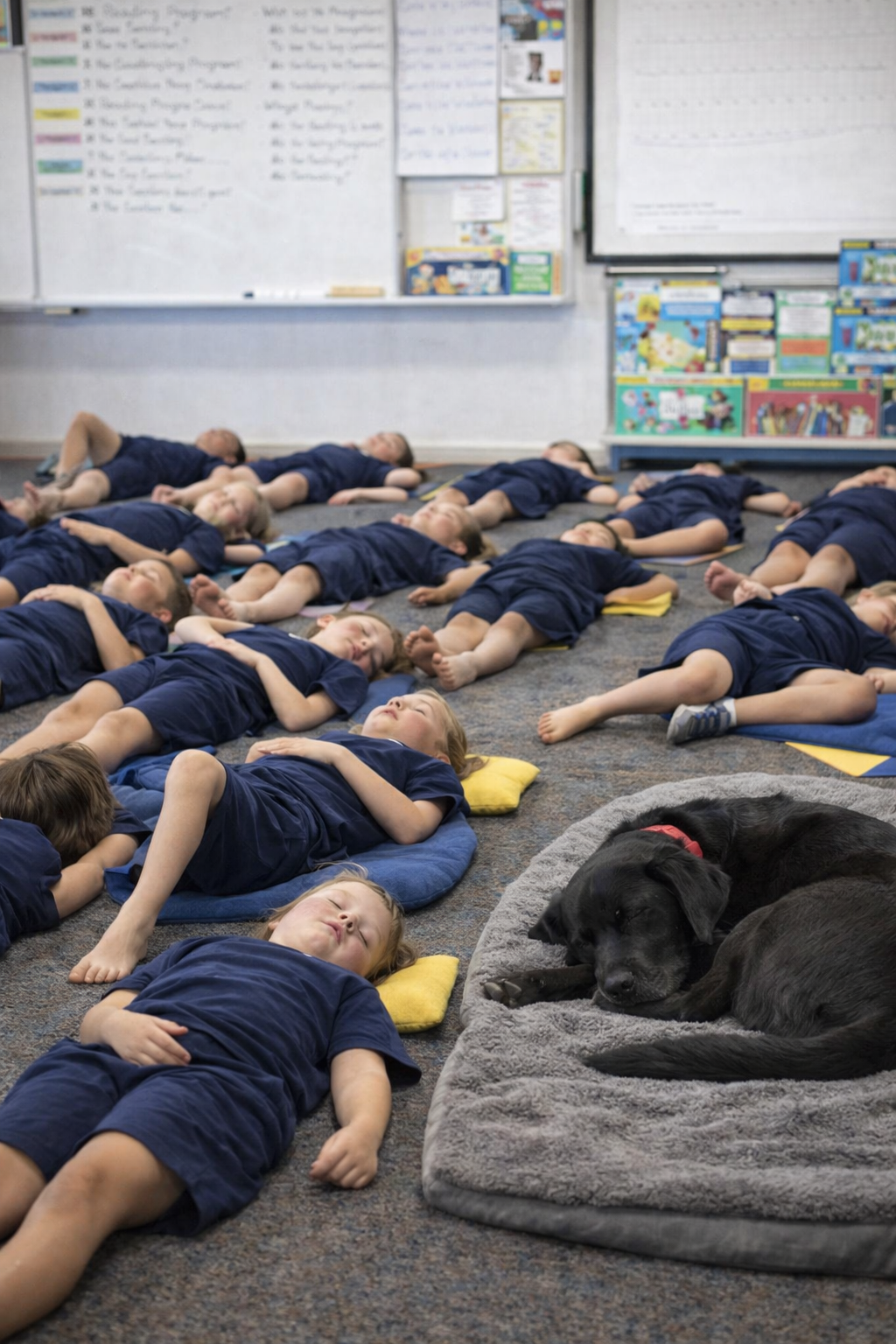
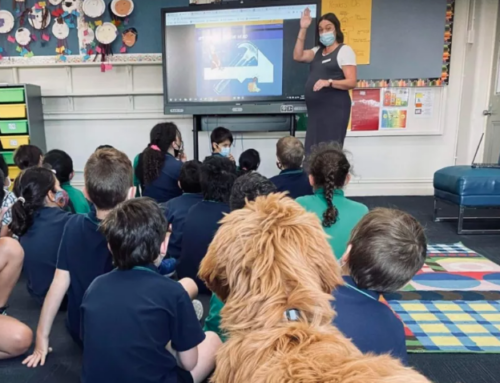
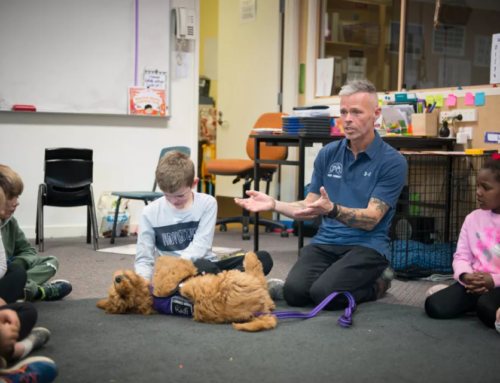
Dogs are extraordinarily attuned to shifts in tone of voice, movement, and group energy. It’s part of what makes them so effective in school settings and it’s also why learning to read what they’re telling us is one of the most valuable skills a school community can develop. A wellbeing dog isn’t just a calming presence in the room; they’re a live gauge of how that room is actually going, if we know how to look.
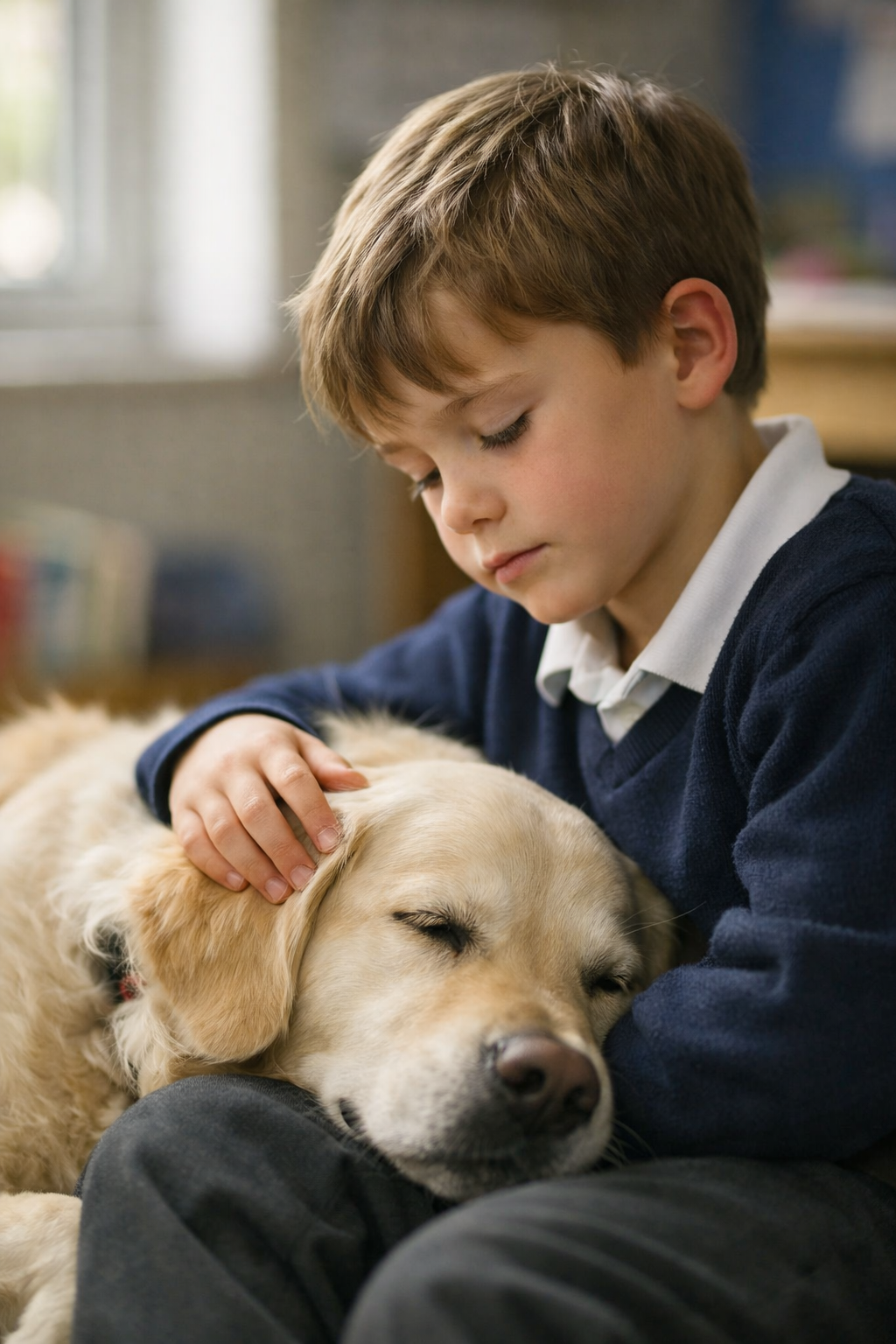
Behaviour Is Communication, Not Difficulty
A dog who suddenly seeks out a quiet corner, turns away from a group, or stays glued to their carer’s side isn’t being difficult, stubborn, or “off.” They’re communicating. These small behaviours are often the earliest sign that the energy in a room has shifted — sometimes before staff have consciously registered it themselves.
This is the shift in mindset we encourage across every Dogs Connect community: instead of asking “what’s wrong with the dog today?”, ask “what is the dog noticing that I haven’t yet?” More often than not, the dog is simply ahead of the room.
Signals Worth Watching For
Some common signals we coach Core Group members and wider staff to look out for:
- Lip licking, yawning, or shaking off when nothing physical warrants it. These are classic low-level stress signals. They are small, easy to miss, and usually the first indicators that something in the environment has changed.
- Moving toward an exit or an anchor point. This is typically a request for distance or downtime, not an attempt to leave the program or the space altogether.
- Stillness or a lowered body posture in an otherwise relaxed dog. Often a response to rising noise or tension in the room, even when nothing dramatic has happened yet.
- Increased attention-seeking or clinginess toward a trusted adult. A dog looking for reassurance, much like a student would seek out a familiar face when unsettled.
None of these signals mean something has gone wrong, they’re simply information, the same as a change in a student’s tone or posture might be. The goal isn’t to eliminate these moments; it’s to notice them early enough to respond well.

Why Supporting the Retreat Matters
A dog who is supported to step back when they need to, rather than being encouraged to “push through”, stays regulated for longer and remains a genuinely positive presence in the classroom, rather than one that’s just tolerating it.
This is a distinction worth sitting with. A dog that is quietly enduring a stressful environment might still look “fine” on the surface, but the wellbeing benefit to students starts to erode long before the dog shows obvious distress. Protecting the dog’s ability to self-regulate through predictable routines, familiar Core Group members, safe spaces, and accessible anchor points, is what keeps the program genuinely beneficial for everyone in the room, not just sustainable for the dog.
Building This Awareness Across the Whole Team
The most effective implementation we see is when schools treat their wellbeing dog’s body language the same way they’d treat a students as real, useful data about how the room is going. They don’t wait for the carer to flag it, they notice it themselves, because they’ve been shown what to look for.
This is one of the simplest and most powerful shifts a school community can make. Building this awareness across a whole staff team, not just the carer, means:
- More adults in the building are equipped to support the dog and the students in the moment a signal appears.
- The dog’s wellbeing is protected even when the carer isn’t in the room.
- Staff develop a shared, practical language for talking about classroom energy. One that benefits the whole community, dog included.
The Takeaway
Wellbeing dogs are reading the room constantly — the tone, the movement, the mood. Our job, as the humans around them, is to get better at reading them right back. When we do, everyone benefits: the dog stays regulated and genuinely engaged, staff get an early signal they can act on, and students get the full benefit of a program built on trust rather than tolerance.
Next time your wellbeing dog steps back, seeks their anchor point, or leans in a little closer than usual, take a moment to think. They might be telling you something the room hasn’t said out loud yet.